Large scale assessments provide critical insights into learning outcomes across education systems, but executing them effectively requires careful planning, robust processes, and strong quality controls. In this webinar, we explore how large scale assessments are designed and implemented in India, from test development and sampling to field execution and data analysis. The session will highlight key operational challenges and share practical insights on ensuring reliable data that can inform policy decisions and strengthen learning outcomes at scale.

Menu

webinars
Join Our Weekly Webinars on Transforming Learning
Discover innovative solutions and insights from education leaders.
About Ei Webinars
Ei’s webinar series covers a diverse range of topics aimed at empowering educators and parents to enhance student learning outcomes.
Our sessions on diagnostic assessments emphasise the importance of identifying student strengths and weaknesses, enabling teachers to adapt their teaching strategies accordingly. We also delve into personalised adaptive learning that cater to individual learning needs by addressing misconceptions and fostering a deeper understanding of core concepts.
A key focus of our webinars is on student misconceptions, particularly in subjects such as English, Science, and Mathematics. These sessions equip educators with the tools to address common student errors, helping to build stronger foundations for learning. Additionally, our webinars include detailed sessions on interpreting the teacher reports generated from Ei ASSET assessments, providing schools and teachers with valuable insights to improve student performance.
We also hold sessions on gifted studies, particularly for parents, highlighting the importance of early identification of talent and offering guidance on nurturing gifted children to help them achieve their full potential.
Through these topics, Ei’s webinars create a comprehensive learning experience for both educators and parents
Upcoming Webinars
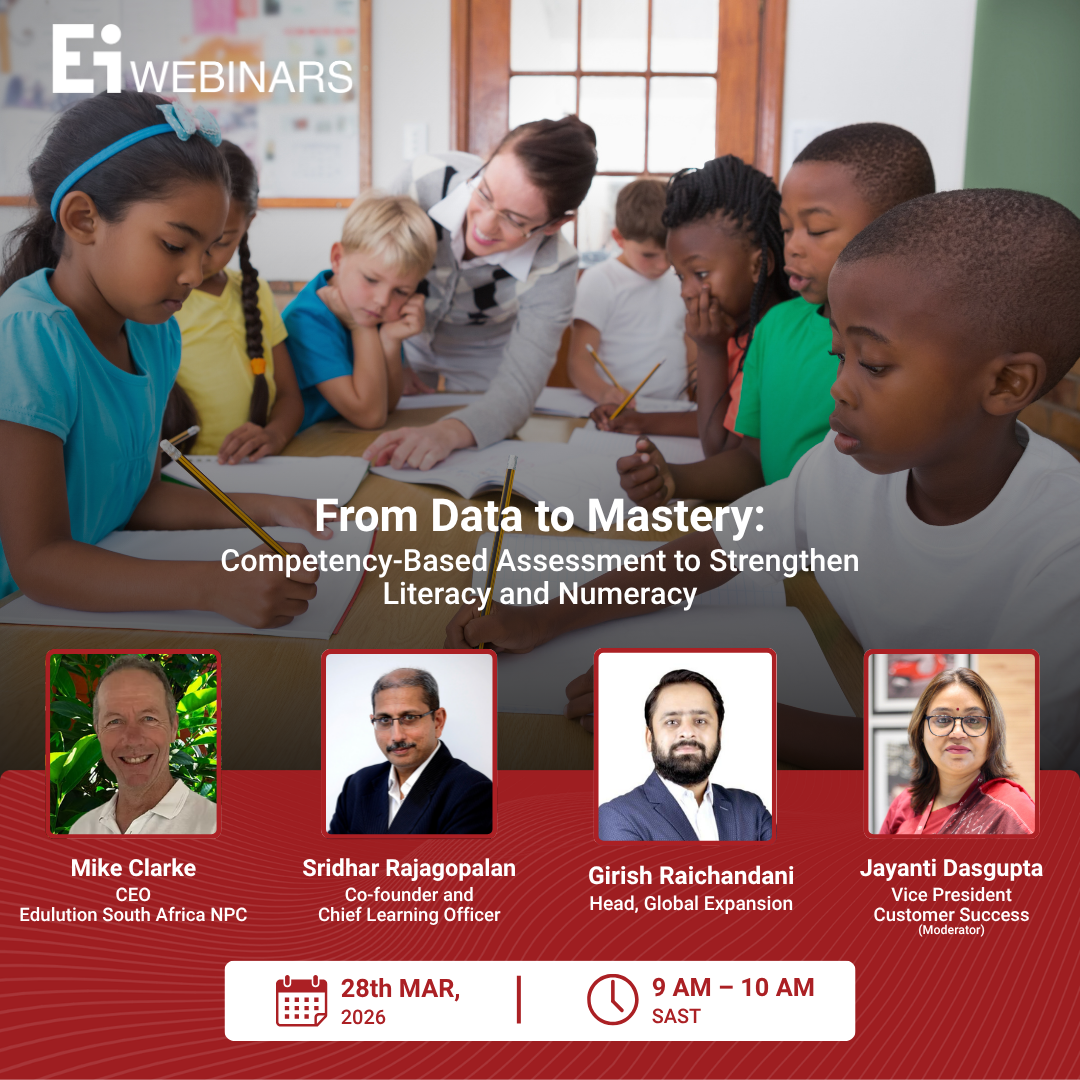
From Data to Mastery: Competency-Based Assessment to Strengthen Literacy and Numeracy
About the Webinar:
This webinar focuses on how competency-based assessment can help educators move from raw data to meaningful instructional action. It explores how assessment evidence can be used to identify specific learning gaps in literacy and numeracy. The session highlights ways to interpret student data beyond scores and percentages.
Through classroom-linked examples, we will discuss how insights from assessments can guide targeted teaching and remediation. The webinar emphasises using data as a practical tool to support mastery, strengthen foundations, and inform everyday classroom decisions.
Speakers:
- Mike Clarke – CEO, Edulution South Africa NPC
- Sridhar Rajagopalan – Co-founder and Chief Learning Officer, Ei
- Girish Raichandani – Head, Global Expansion, Ei
- Jayanti Dasgupta – Vice President, Customer Success, Ei
- Date: 28 March 2026
- Time: 9 AM to 10 AM SAST

Making Learning Stick: How Productive Failure Builds Real Mastery
Speakers:
- Prakhar Ghildyal – Associate Vice President Assessments
- Date: 4 April 2026
- Time: 5 PM to 6 PM IST

Executing Large Scale Assessments in India
Speaker:
- Date: 11 April 2026
- Time: 5 PM to 6 PM IST

The Width of the Zone: Why Diagnostic Pedagogy is the Future of Teaching
Effective teaching depends not just on delivering content, but on understanding where students are in their learning journey. This webinar explores the concept of diagnostic pedagogy and why identifying the width of the learning zone is critical for meaningful progress. The session will examine how ongoing diagnosis of student thinking helps educators design targeted instruction, reduce learning gaps, and respond more precisely to misconceptions. Participants will gain practical insights into how diagnostic approaches can transform classroom decision-making and improve learning outcomes at scale.
Speaker:
- Prakhar Ghildyal – Associate Vice President Assessments
- Date: 20 June 2026
- Time: 5 PM to 6 PM IST
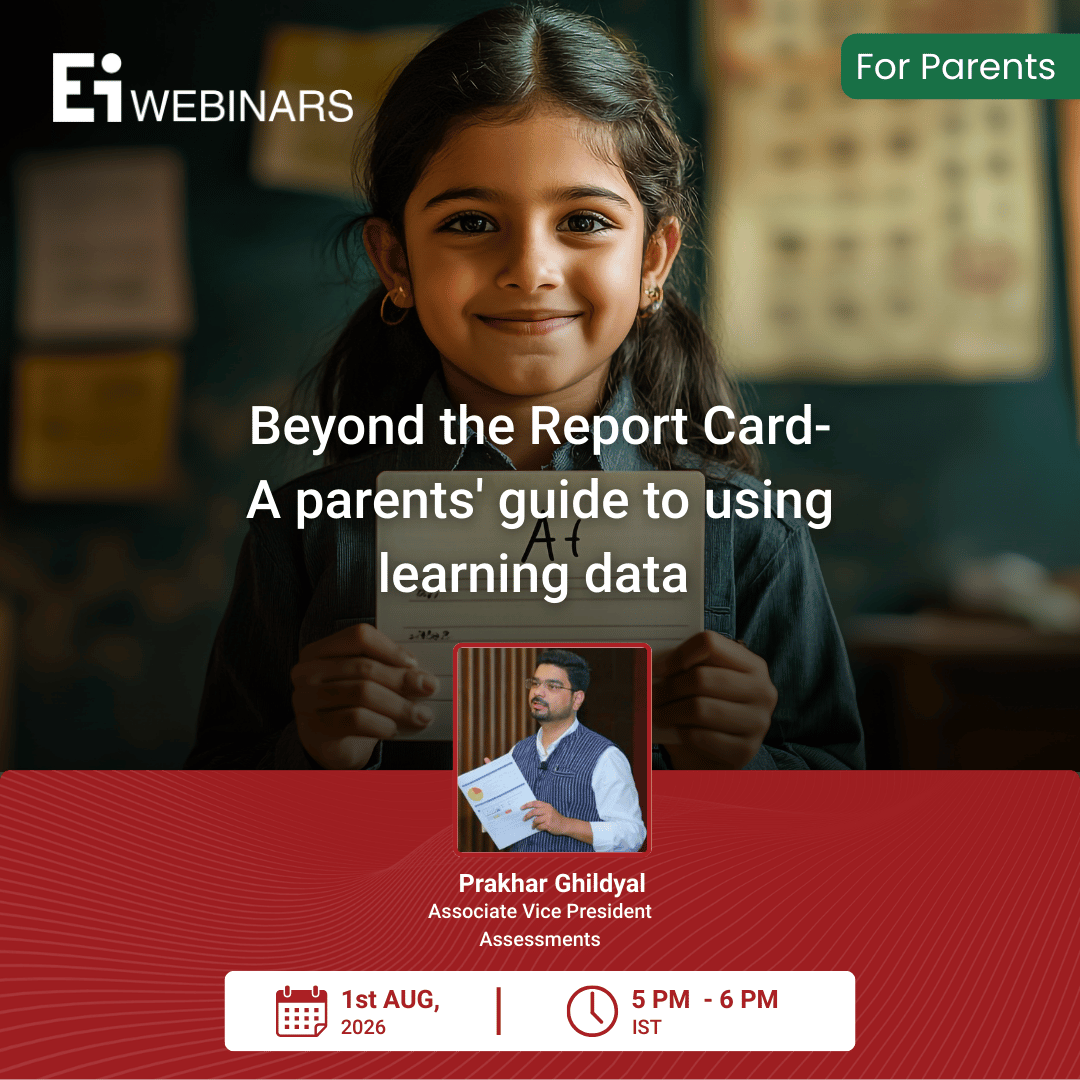
Beyond the Report Card: A Parents’ Guide to Using Learning Data
Report cards provide a snapshot of performance, but they rarely tell the full story of how a child is learning. This webinar is designed for parents who want to move beyond grades and understand how to interpret learning data meaningfully. The session will explore how assessment insights, patterns of strengths and gaps, and progress indicators can help parents support their child’s development more effectively. Participants will gain practical guidance on asking the right questions, using data constructively, and partnering with schools to make informed decisions that strengthen learning outcomes.
Speaker:
- Prakhar Ghildyal – Associate Vice President Assessments
- Date: 1 August 2026
- Time: 5 PM to 6 PM IST
Previous Webinars

Giving Your Gifted Child the Right Platform to Shine with Ei ASSET Talent Search
Speakers:
- Saiqua Sultan – Head of Giftedness and Talent Search
- Swarnali Chakraborty – Head of Marketing
- Date: 25 March 2026
- Time: 8 PM to 9 PM GST

Demystifying AI - A Tech Industry Guide for students and parents
About the Webinar:
This webinar explores practical ways educators can integrate AI into everyday classrooms. The focus is on supporting teaching, learning, and assessment while keeping pedagogy at the centre. Using classroom-relevant examples, we will show how AI can personalise learning and support teacher decision making.
Speakers:
- Parna Mehta – Cloud & AI-ML Tech professional at Amazon
- Bharath Arunachalam – Lead Educational Specialist, AI & Digital Thinking
- Date: 21 March 2026
- Time: 5 PM to 6 PM IST

Beyond Just a Test How Ei ASSET Talent Search shapes lifelong learners
Speakers:
- Aarthi Muralidharan – Senior Vice President and Product Head Ei ASSET
- Saiqua Sultan, Manager – Giftedness and Talent Search
- Girish Raichandani – Head, Global Expansion
- Date: 21 March 2026
- Time: 11 AM to 12 PM GST

Giving Your Gifted Child the Right Platform to Shine with Ei ASSET Talent Search
Speakers:
- Saiqua Sultan – Head of Giftedness and Talent Search
- Swarnali Chakraborty – Head of Marketing
- Date: 18 March 2026
- Time: 8 PM to 9 PM GST
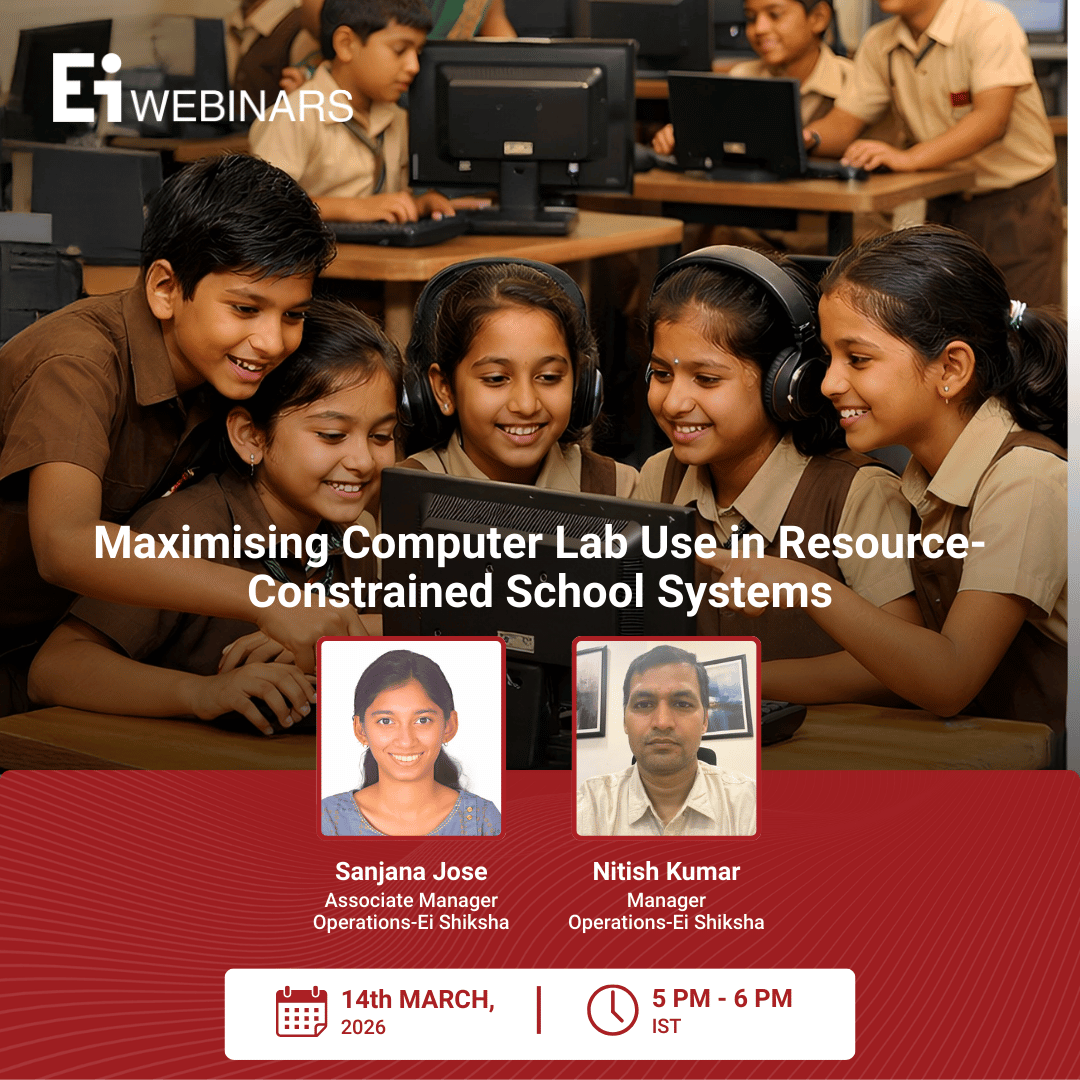
Maximising Computer Lab Use in Resource-Constrained School Systems
In many school systems, computer labs exist but remain underused due to constraints of time, infrastructure, and planning. This webinar examines how schools can make more effective instructional use of limited computer lab access, especially in resource-constrained settings. Drawing on classroom and system-level experiences, the session will explore practical models for scheduling, lesson design, and teacher support that help integrate technology meaningfully into everyday teaching. The discussion will focus on using available digital resources to support learning goals rather than treating computer labs as standalone or occasional add-ons.
Speaker:
- Sanjana Jose – Associate Manager, Operations-Ei Shiksha
- Nitish Kumar – Manager, Operations-Ei Shiksha
- Date: 14 March 2026
- Time: 5 PM to 6 PM IST