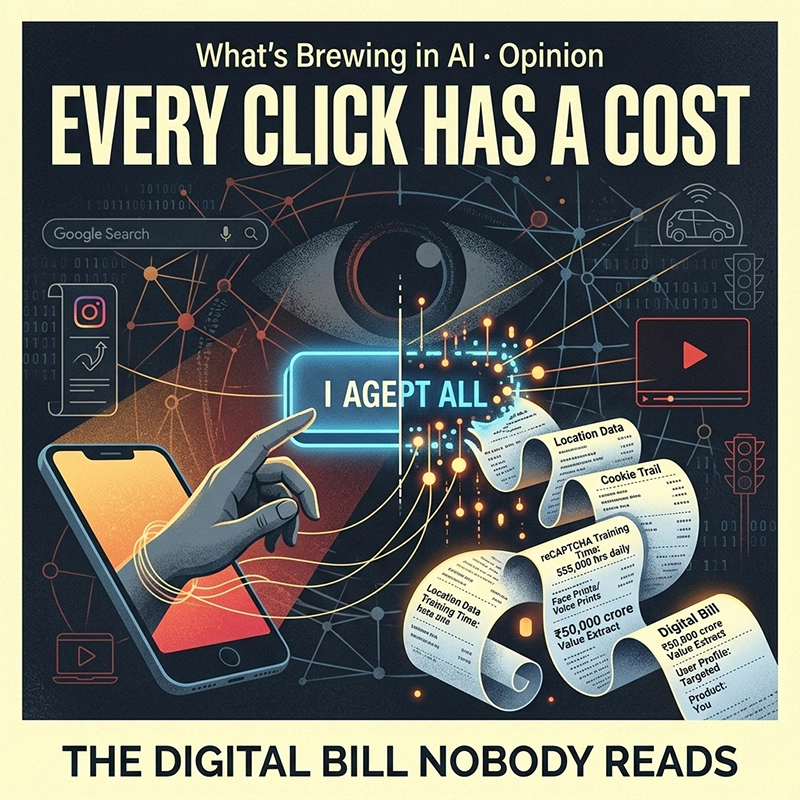
Every Click Has a Cost: The Digital Bill Nobody Reads
What’s Brewing in AI · Opinion
People scroll, click, and accept. In that routine, repeated dozens of times a day, they hand over more
than they realize. And most of them have no idea it’s happening.
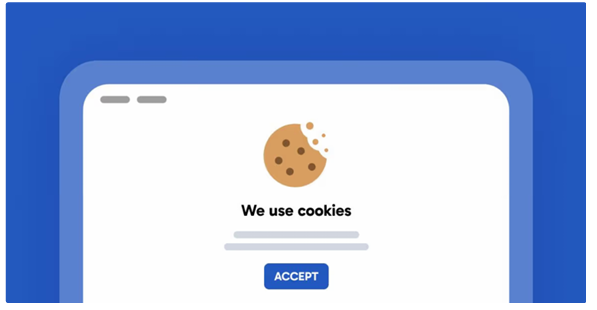
It takes the average person 8 seconds to click “Accept All” on a cookie banner. The text is dense, the
language is legal, and there’s a video or article waiting. So the click happens, life moves on.
The internet, though, doesn’t move on. It keeps everything.
The Bargain Nobody Agreed To
The internet was never free. It was always a trade. The question is whether anyone explained what was being traded.
When you search on Google, scrolls Instagram, or watches YouTube, they are not the customer. They
are the product. The real customers are advertisers buying access to attention, behavior, and future
decisions. Google processes 8.5 billion searches every day — each one stored, analyzed, and used to
build a sharper picture of who that person is and what they’ll do next.
Meta has admitted in court filings that it collects data on people without Facebook accounts, through
trackers embedded across millions of other websites. TikTok’s terms of service — technically agreed
to by 150 million Americans — include permission to collect face prints, voice prints, and keystroke
rhythms. A 2017 Carnegie Mellon study found that reading every privacy policy a person encounters in
a year would take 76 full working days. So almost nobody does. They click “I Agree” and move on.
What Cookies Actually Do
Most people have heard the word “cookie.” Almost nobody knows what it means.
‘This is a quote that I want you to read.”
When someone visits a website, that site drops a small file onto their device — a cookie — that records
they were there. On itʼs own, this is quite harmless. But most websites also load trackers from Google,
Meta, and data companies running quietly in the background, each dropping their own cookie. Unlike
the website’s, these travel — following the person to the next site, and the one after that. Those shoes
browsed for 30 seconds will appear in ads for weeks across dozens of unrelated websites, because
every page visited quietly reports back.
A 2020 Cookiebot study of 35,000 websites found Google’s tracking on 86% of them. Facebook’s
tracker appeared on 36%. The average webpage loads 22 third-party tracking scripts — invisible,
unannounced, running the moment a page opens. Clicking “Accept All” doesn’t just let one website
remember a preference. It often means agreeing to be followed across the entire internet, indefinitely.
The banners are designed to make accepting easy and declining difficult. That is not an accident.
The reCAPTCHA Story
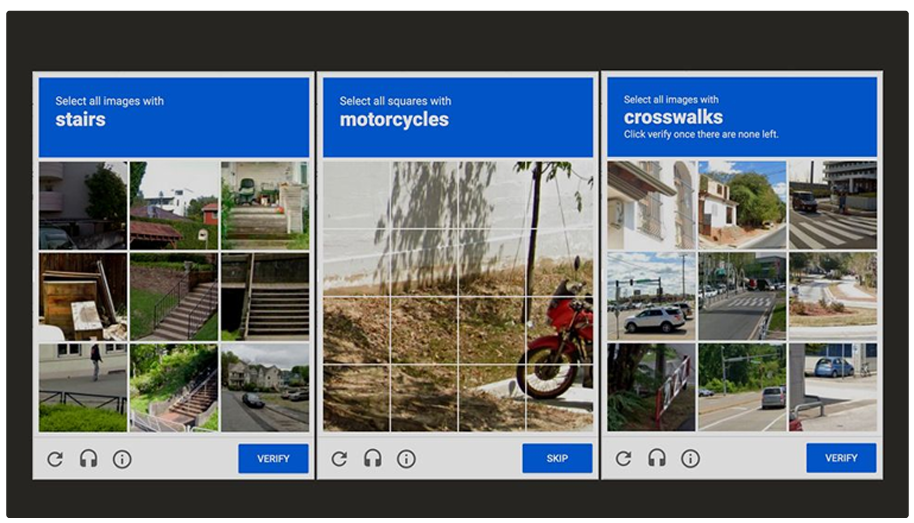
For over a decade, people solved a small puzzle before logging into websites: Select all squares with
traffic lights. Click every crosswalk. Prove you’re not a robot. It felt like a security check. It wasn’t.
Between 2012 and 2019, those clicks were training Google’s self-driving cars. Every identified stop
sign or pedestrian taught an AI to see — for free, without consent. According to The Hustle, 200
million people did this daily: 555,000 hours of unpaid labor, every single day. Over 15 years, 819 million
hours of work, valued at roughly ₹50,000 crore ($6.1 billion). Waymo, which benefited most, is now
worth over ₹10 lakh crore ($126 billion)
Nobody asked for permission. The work was simply taken. Most people still don’t know it happened.
The Generation Growing Up Inside This
An average child gets their first smartphone at 10. By 13, an estimated 72 million data points have
already been collected about them — from the games they play, the videos they watch, the searches
they run, the messages they send. They are being studied before they are old enough to understand
what that means.
A 2024 Internet Safety Labs study found that 83% of teenagers don’t know what cookies are. 91%
have never read a single privacy policy. 67% believe incognito mode makes them untraceable online. It
doesn’t — it only stops the browser from saving local history.
These young people are not careless. They are doing exactly what they have watched everyone around them do.
But the consequences are real. A 12-year-old tapping “Allow” on a free game hands over their location,
contacts, photos, and microphone — without knowing it. A 15-year-old searching for college
information is building a permanent data profile that advertisers will use to target them for years. The
search results they trust are not ranked by accuracy — they are ranked by advertising spend. A
student who picks the first result thinks they found the answer. They found the highest bidder. A 17
year-old sharing an article without checking the source is participating in a system designed to reward
reaction over truth. Fake news travels six times faster than accurate reporting on social media, according to a 2018 MIT study — not because young people are gullible, but because the platforms are deliberately built that way.
India has 750 million internet users, with millions more coming online every year. The gap is not
access. The gap is understanding what is happening on the other side of the screen.
Digital literacy is not about being afraid of technology. It is about understanding enough to make a real
choice — to know what is being asked before clicking yes, to question what is being shown and why,
to recognize that free almost always means something is being paid for, just not with money. That shift,
from passive user to informed thinker, is what this generation needs. And right now, most of them are
navigating the digital world without it
Placeholder — Module Spotlight Block Label: Module Spotlight — Mindspark AI & Digital Thinking Module Name – Behind The FeedStrand: Digital Literacy & Awareness
Behind the Feed puts students inside the system the article warns about. The article points out that
most young people have no idea their every scroll, like, and share is feeding a machine that decides
what they see next. This module makes that visible. Following a character with real interests, students
interact with a simulated feed while a live backend dashboard translates every action into signals,
scores, and rankings in real time. Skip a video, the skip rate spikes. Share a post, the signal doubles.
What feels like casual scrolling, it turns out, is data — and this module ensures students finally
understand what they’re handing over every time they open an app.
Sources: Google Search Statistics (2025) · Meta Court Filings, California District Court (2023) ·
Cookiebot European Cookie Study (2020) · reCAPTCHA Analysis, The Hustle (2020) · Internet Safety
Labs Teen Privacy Study (2024) · MIT Fake News Study, Science (2018) · Digital Personal Data
Protection Act, India (2023) · Carnegie Mellon Privacy Policy Study (2017)
Whatʼs brewing in AI?
Every Click Has a Cost: The Digital Bill Nobody Reads
You scroll, click, and accept. In that routine, repeated dozens of times a day, you hand over more than
you realise. And most people have no idea it’s happening.
It takes the average person 8 seconds to click “Accept All” on a cookie banner. The text is dense, the
language is legal, and there’s a video or article waiting. So the click happens, life moves on.
The internet, though, doesn’t move on. It keeps everything.
The Bargain Nobody Agreed To
The internet was never free. It was always a trade. The question is whether anyone explained what
was being traded.
When you search on Google, scroll Instagram, or watch YouTube, you are not the customer. You are
the product. The real customers are advertisers buying access to attention, behaviour, and future
decisions. Google processes 8.5 billion searches every day — each one stored, analysed, and used to
build a sharper picture of who you are and what you’ll do next.
Meta has admitted in court filings that it collects data on people without Facebook accounts, through
trackers embedded across millions of other websites. TikTok’s terms of service — technically agreed
to by hundreds of millions of users worldwide — include permission to collect face prints, voice prints,
and keystroke rhythms. A 2017 Carnegie Mellon study found that reading every privacy policy a person
encounters in a year would take 76 full working days. So almost nobody does. They click “I Agree” and
move on.
What Cookies Actually Do
‘ʼMost people have heard the word “cookie.” Almost nobody knows what it means.
When you visit a website, that site drops a small file onto your device — a cookie — that records you
were there. On its own, that file does very little — it might just keep you logged in or remember your
language preference. But most websites also load trackers from Google, Meta, and data companies
running quietly in the background, each dropping their own cookie. Unlike the website’s cookie, these
travel — following you to the next site, and the one after that. Those shoes you browsed for 30
seconds will appear in ads for weeks across dozens of unrelated websites, because every page you
visit quietly reports back.
A 2020 Cookiebot study of 35,000 websites found Google’s tracking on 86% of them. Facebook’s
tracker appeared on 36%. The average webpage loads 22 third-party tracking scripts — invisible,
unannounced, running the moment a page opens. Clicking “Accept All” doesn’t just let one website
remember your preferences. It often means agreeing to be followed across the entire internet,
indefinitely. The banners are designed to make accepting easy and declining difficult. That is not an
accident.
The reCAPTCHA Story
For over a decade, people solved a small puzzle before logging into websites: Select all squares with
traffic lights. Click every crosswalk. Prove you’re not a robot. It felt like a security check.
It was something else entirely.
Between 2012 and 2019, those clicks were training Google’s self-driving cars. Every identified stop
sign or pedestrian taught an AI to see — for free, without consent. According to The Hustle, 200
million people did this daily: 555,000 hours of unpaid labour, every single day. Over 15 years, 819
million hours of work, valued at roughly ₹50,000 crore ($6.1 billion). Waymo, which benefited most, is
now worth over ₹10 lakh crore ($126 billion).
Nobody asked for permission. The work was simply taken. Most people still don’t know it happened.
The Generation Growing Up Inside This
An average child gets their first smartphone at 10. By 13, an estimated 72 million data points have
already been collected about them — from the games they play, the videos they watch, the searches
they run, the messages they send. They are being studied before they are old enough to understand
what that means.
A 2024 Internet Safety Labs study found that 83% of teenagers don’t know what cookies are. 91%
have never read a single privacy policy. 67% believe incognito mode makes them untraceable online. It
doesn’t — it only stops the browser from saving local history.
These young people are not careless. They are doing exactly what they have watched everyone around them do.
But the consequences are real. A 12-year-old tapping “Allow” on a free game hands over their location,
contacts, photos, and microphone — without knowing it. A 15-year-old searching for college
information is building a permanent data profile that advertisers will use to target them for years. The
search results they trust are not ranked by accuracy — they are ranked by advertising spend. A
student who picks the first result thinks they found the answer. They found the highest bidder. A 17
year-old sharing an article without checking the source is participating in a system designed to reward
reaction over truth. Fake news travels six times faster than accurate reporting on social media,
according to a 2018 MIT study — not because young people are gullible, but because the platforms
are deliberately built that way.
India has 750 million internet users, with millions more coming online every year. The gap is not
access. The gap is understanding what is happening on the other side of the screen.
Digital literacy is not about being afraid of technology. It is about understanding enough to make a real
choice — to know what is being asked before clicking yes, to question what is being shown and why,
to recognise that free almost always means something is being paid for, just not with money. That shift,
from passive user to informed thinker, is what this generation needs. And right now, most of them are
navigating the digital world without it.
From the Curriculum
Feature Module: Behind The Feed — Mindspark AI & Digital Thinking
Strand: Digital Literacy & Awareness
Behind the Feed puts students inside the system the article warns about. Working through a simulated
social media feed, they learn that what appears on their screen isn’t random — it’s the output of an
algorithm that scores every action you take. Through this, students start to see how their own
behaviour quietly trains the feed over time, why certain content spreads faster than others and who
benefits when it does, and how even negative interactions register as engagement and get rewarded
all the same. They begin to understand how personal data builds interest profiles that make feeds
increasingly hard to look away from, and learn to tell the difference between content genuinely worth
their attention and content that is simply engineered to get it. Most importantly, they leave knowing that
their attention is not just being captured — it is being measured, predicted, and sold. That awareness is
what turns a passive scroller into someone who actually knows what they’re handing over every time
they open an app.
Sources: Google Search Statistics (2025) · Meta Court Filings, California District Court (2023) ·
Cookiebot European Cookie Study (2020) · reCAPTCHA Analysis, The Hustle (2020) · Internet Safety
Labs Teen Privacy Study (2024) · MIT Fake News Study, Science (2018) · Digital Personal Data
Protection Act, India (2023) · Carnegie Mellon Privacy Policy Study (2017)
Are these principles already part of your teaching toolkit?
We’d love to hear your story!
Share how you bring these principles to life in your classroom and inspire fellow educators. Write to us at prakhar.ghildyal@ei.study and tell us about your unique teaching journey