- One group used a standard GPT-4
based chat interface, similar to a
normal ChatGPT experience.
- A second group used a GPT-4
based tutor designed with
safeguards, which gave guidance
and hints rather than simply
providing answers.
- A control group used traditional
learning resources such as
textbooks and notes.
The key question was not only whether students performed better while using AI. The
researchers also examined what happened when AI was taken away and students had to solve problems independently
The Main Findings
The findings are important for schools because they show a sharp difference between assisted performance and actual learning.
- Students using the standard GPT-4 tool performed much better during practice. Their practice performance improved by 48% compared with the control group.
- Students using the guided GPT Tutor performed even better during practice, showing a 127% improvement compared with the control group.
- However,
when AI assistance was removed, students who had used the standard GPT-4 tool
performed 17% worse than students who had never used AI assistance.
- The negative effect was largely avoided when students used the guided GPT Tutor, which
was designed to protect learning by giving hints and support rather than direct answers.
In short:
AI improved performance during practice, but unguided AI use weakened later independent performance.
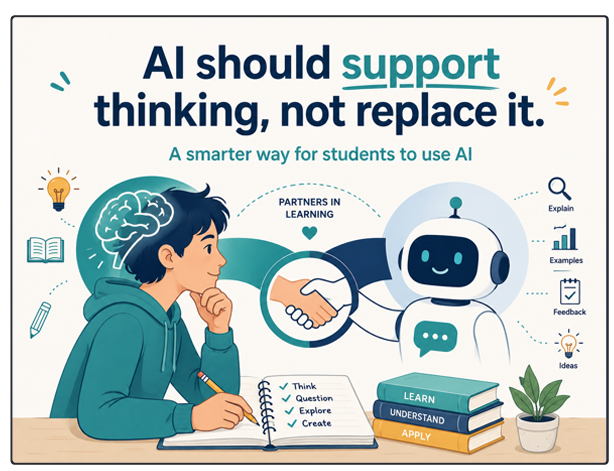
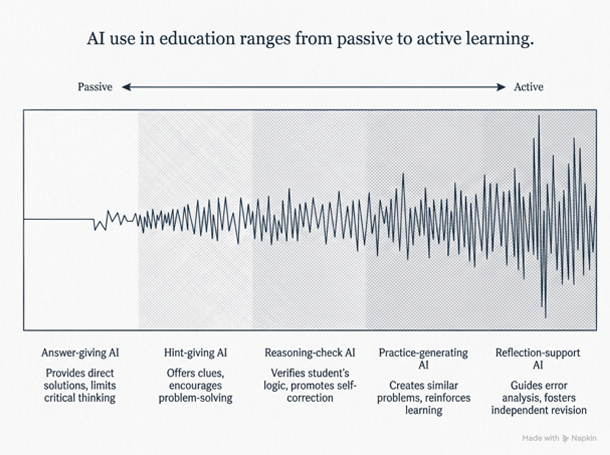
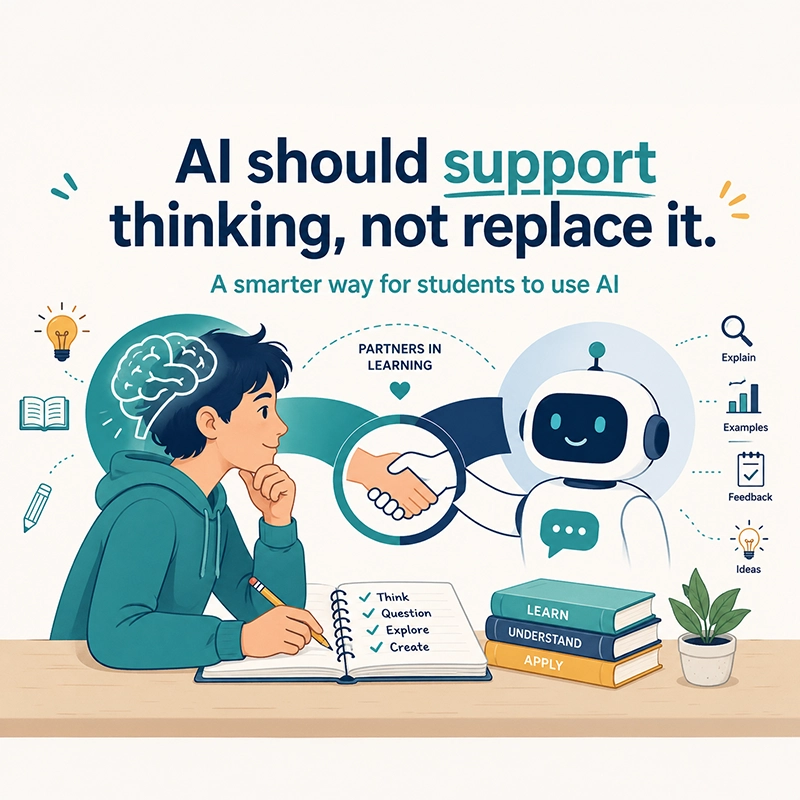
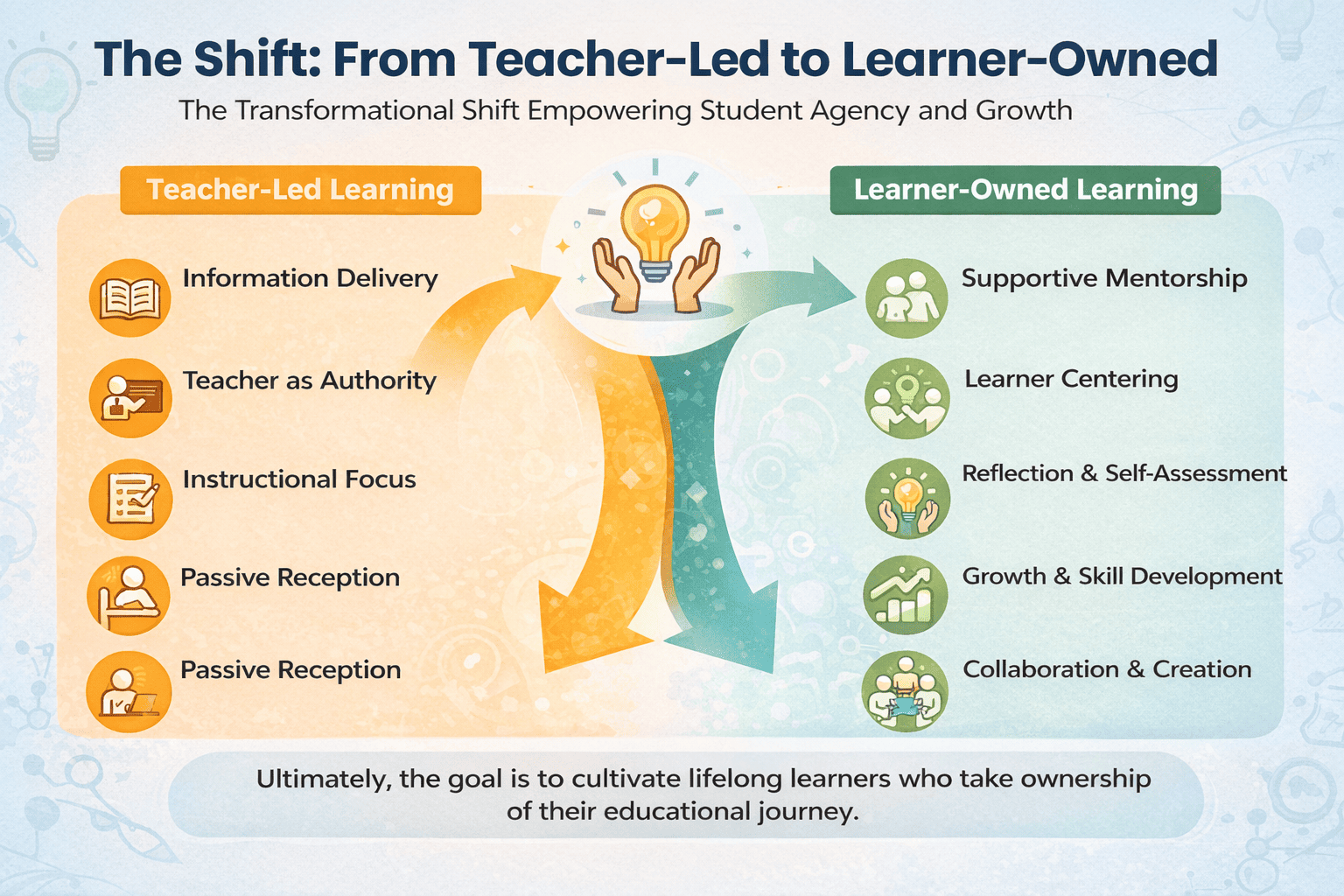
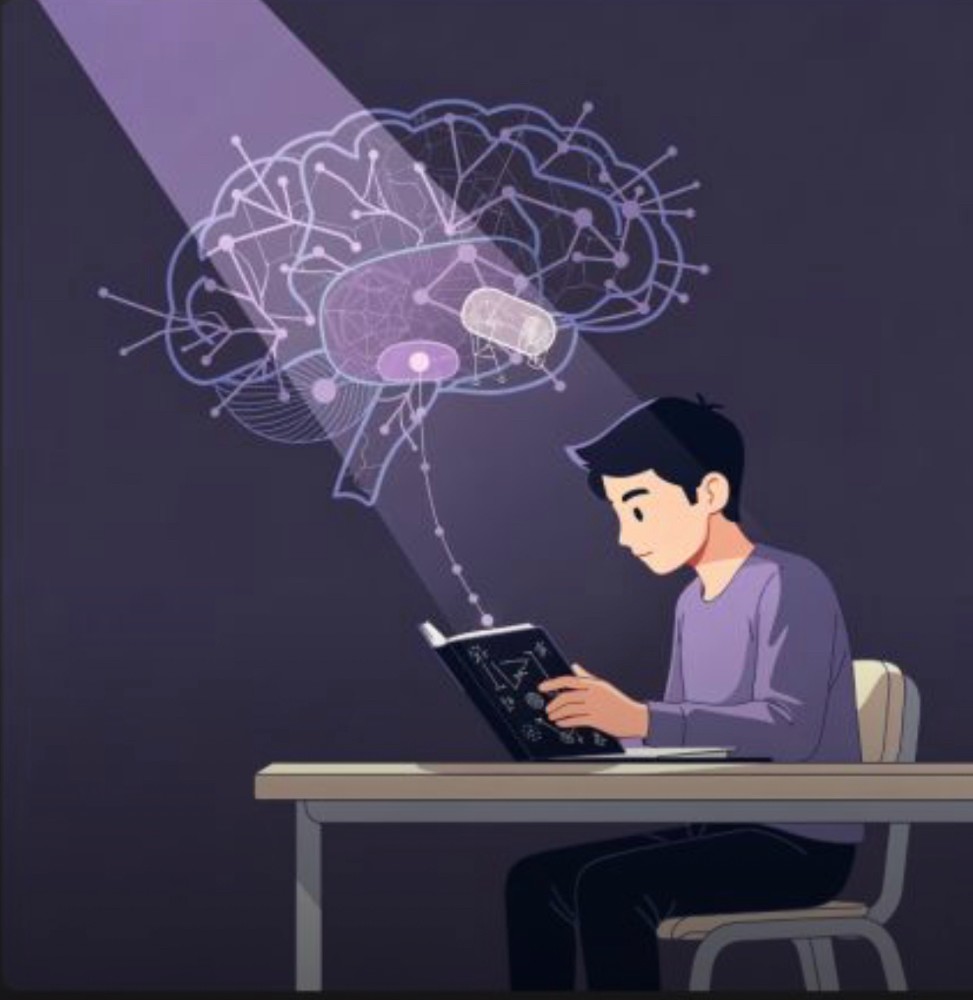
This does not mean AI is bad for learning. It means that how AI is used matters. An AI tool that
gives quick answers can become a shortcut. An AI tool that asks questions, gives hints and
pushes students to explain their reasoning can become a scaffold.
Related ResearchThis finding connects strongly with what teachers already know from classroom experience:
students can appear confident while practising, but struggle when asked to do the same task independently later.
In learning science, this is sometimes may show up as the visible difference between fluency
and mastery. A student may feel fluent because the answer is available, the steps are visible or
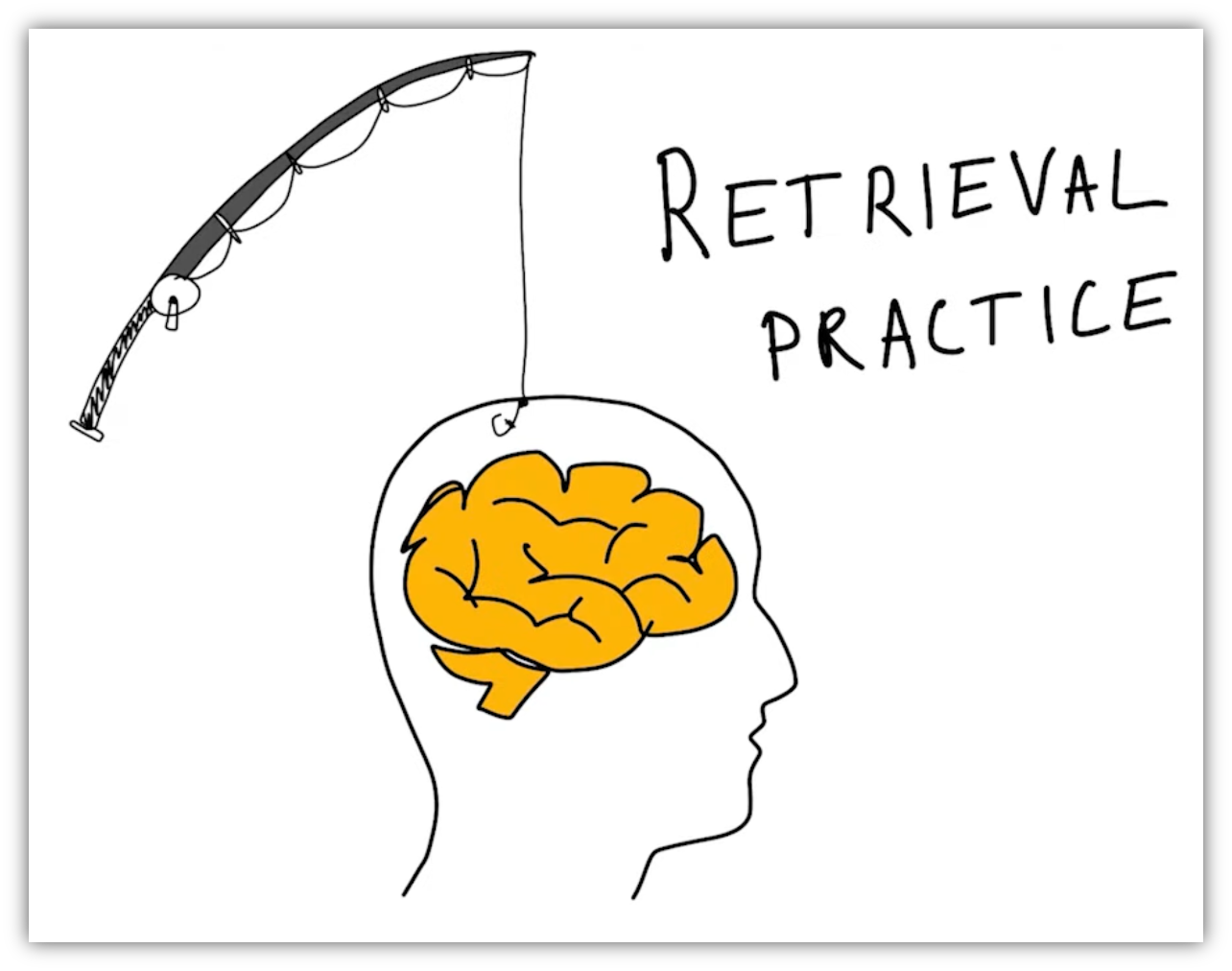
the tool is guiding the process. But mastery requires the student to retrieve, reason, decide,
check and correct their own thinking.
AI can easily create a false sense of understanding. A student may submit a polished answer
without having gone through the productive struggle needed to build the skill. This is especially
risky in subjects such as mathematics, science and writing, where the process matters as much as the final answer
The study is useful because it does not simply say that technology is distracting. It shows a more precise problem:
When AI removes too much thinking from the learner, it may also remove part of the learning.
Classroom Implications
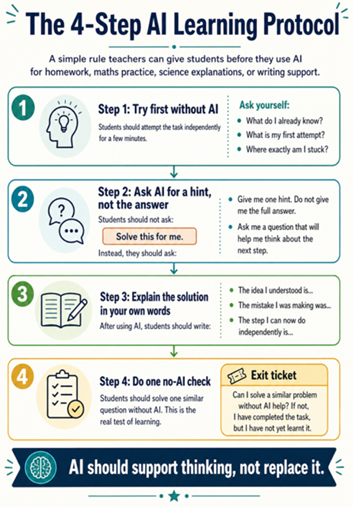
For teachers, the implication is not to ban AI blindly. The better response is to design guardrails.
In practice, this means teachers should distinguish between these kinds of AI use: